
![[keith-snook.info]](/stuff/keith-info-S.png)

~ Triode Amplifier Un–Bypassed Cathode Calculator ~
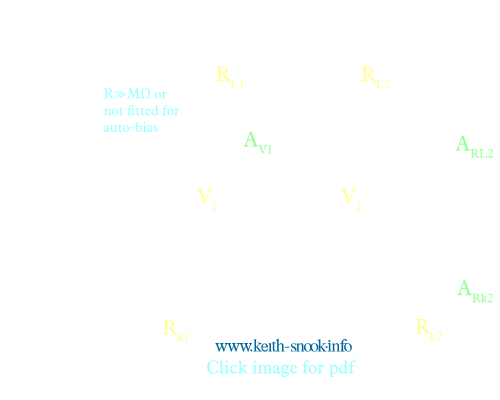
This Calculator was originally to support my Amplifier–Buffer project and can be used to calculate the a.c. gain and impedances but not d.c. operating point of a triode amplifier with a common cathode gain stage and a cathode follower output buffer
Results update as input variables are entered ~ gm ra and µ should be taken from the valve characteristics or manufacturers data ~ The default values are for an ECC81 with gain stage V1 Ia ≈1mA and Cathode follower V2 Ia ≈2.3mA ~ Values ra1' and gm1' for V1 show how un-bypassed Rk1 lowers µ and gm but may improve distortion
It includes anode load RL2 to calculate the gain of a concertina phase splitter where RL2 = Rk2 and the outputs are the same level but anti–phase

The value entered for gm is not used to calculate results but is used to calculate the value µ = gm × ra which should be close to the entered value of µ for the results to be valid ~ As with most calculations with triodes gm and gm' could be used but ra and ra' would also be needed ~ The factor (µ+1) helps simplify things
It is assumed the d.c. bias is optimised for both the gain stage and follower and that the separate values for gm ra and µ have been found and entered for both stages and that a sensible Ia and HT voltage have been chosen
Click here for other calculators ~ ΐ


" I'll rise when the sun goes down ~ Cover every game in town "